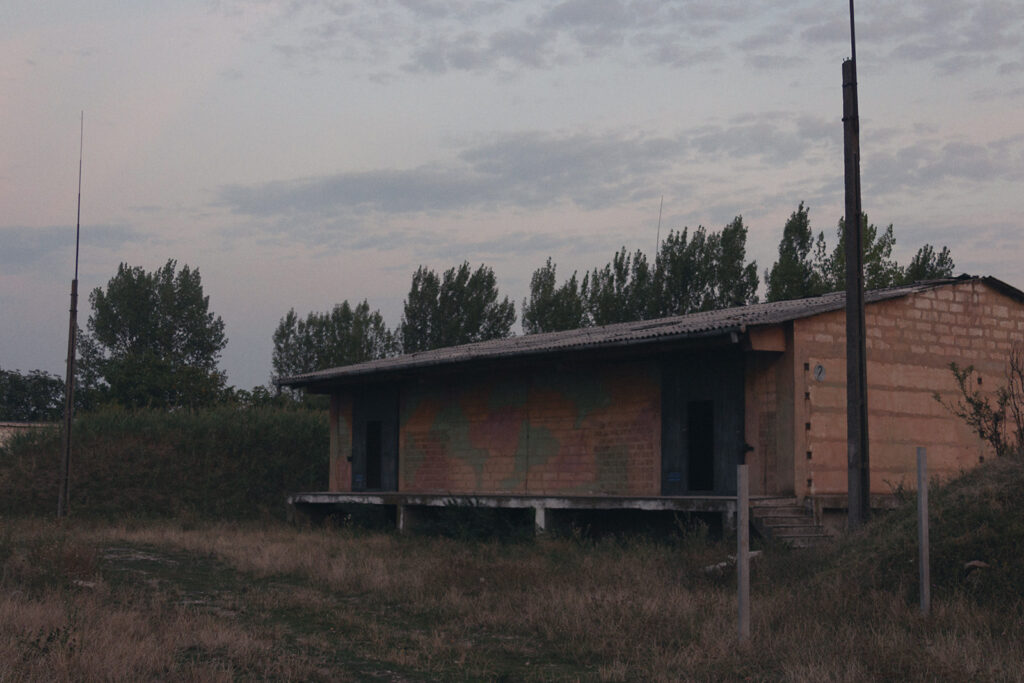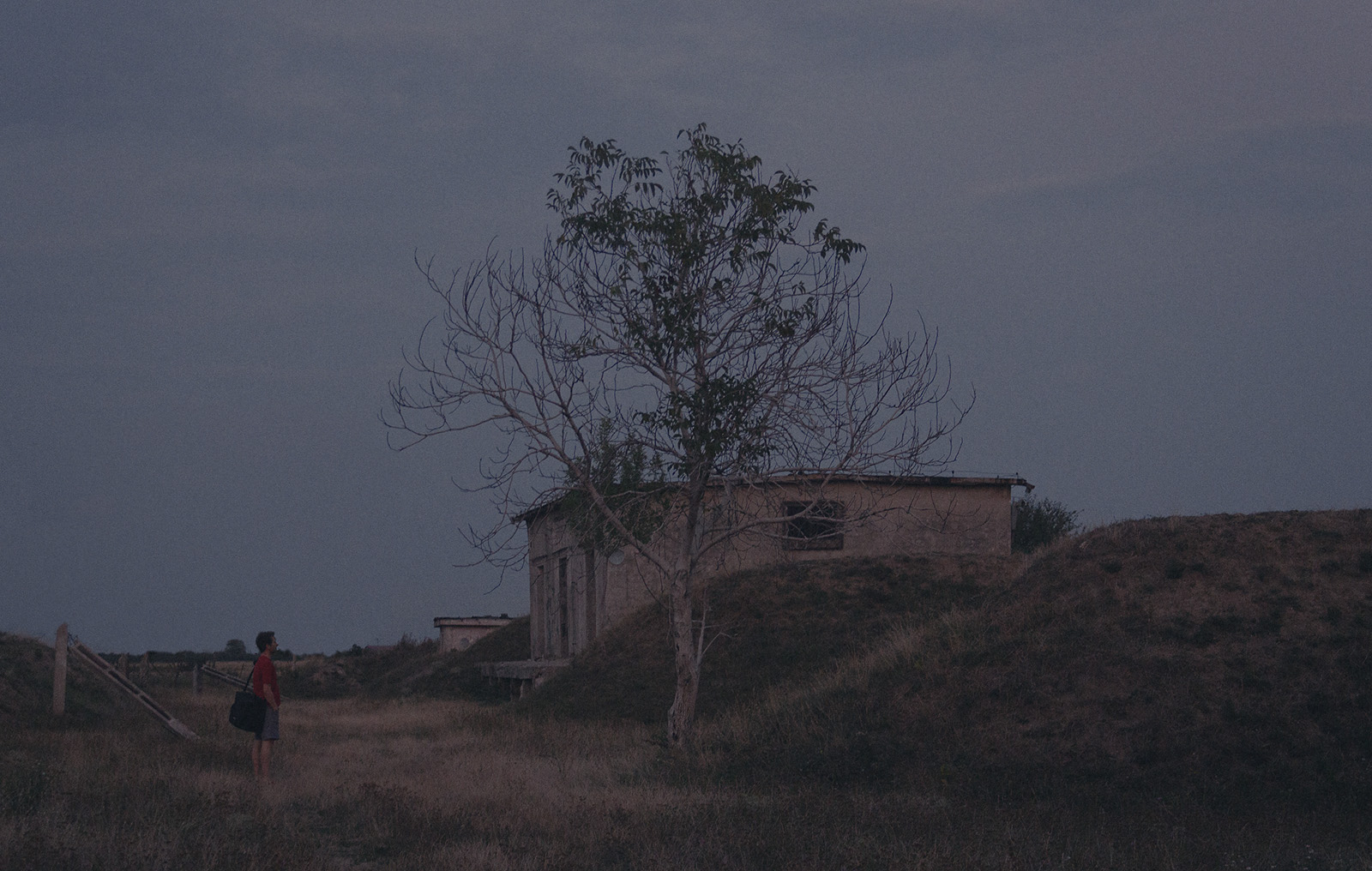
HD video, 11:00 min, 2012
For those who have not undergone compulsory military service, this landscape may seem as if taken from a video game; for those who have, it was a lived reality.
The suspended camera becomes a foreign body within the landscape, oscillating between control and loss. Its nearly uncontrollable movement suggests an uncertain gaze, as if the space itself resists any attempt to be fixed or understood. Certain angles evoke a state between reality and illusion, where the memory of the place has eroded into ambiguity.
Within this setting, a phantom-like entity appears intermittently, its mirror in place of a head reflecting the surroundings and, implicitly, the viewer. Its presence, both relic and projection of the site’s memory, functions as an opaque witness.
The title refers to the optical phenomenon of a mirage, an illusion that distorts reality and makes it appear as something other than what it is.
In this sense, the work explores the idea that an inaccessible past inevitably becomes a speculative construct, a sequence of reflections and distortions.
The video does not tell the story of the base; instead, it constructs an atmosphere in which absence becomes the protagonist. Between fragments of space, unstable movements, and fleeting appearances, Fata Morgana invites the viewer to navigate their own perception, confronting the boundary between what is seen and what is imagined.
co-authors Huba Antal & Levente Kozma
sound Szilárd Szőke
part of the Waiting Spaces project
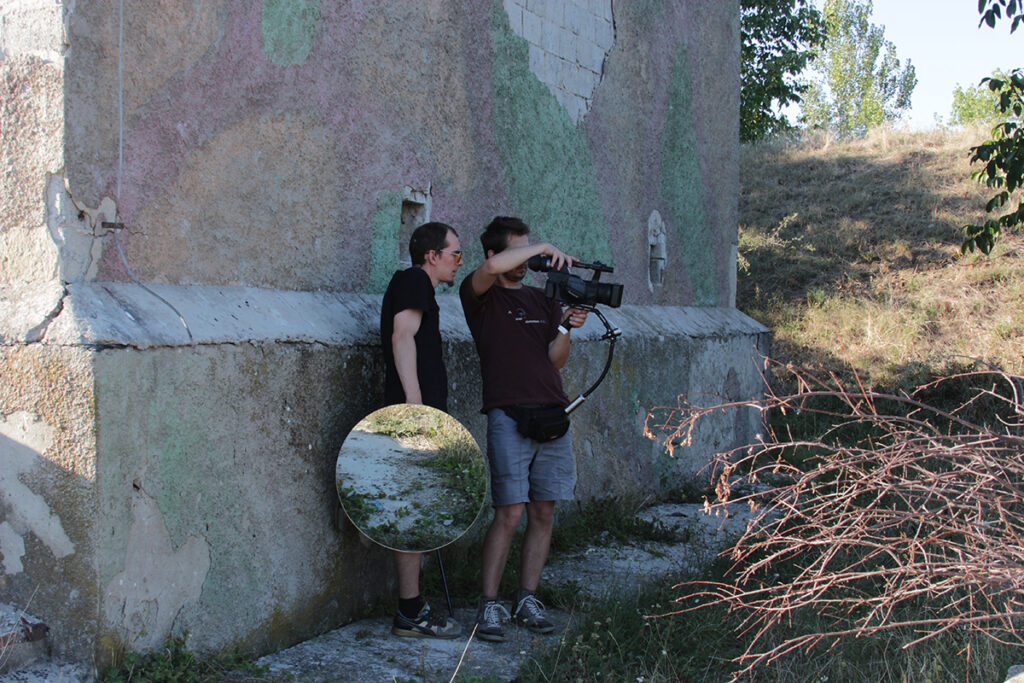
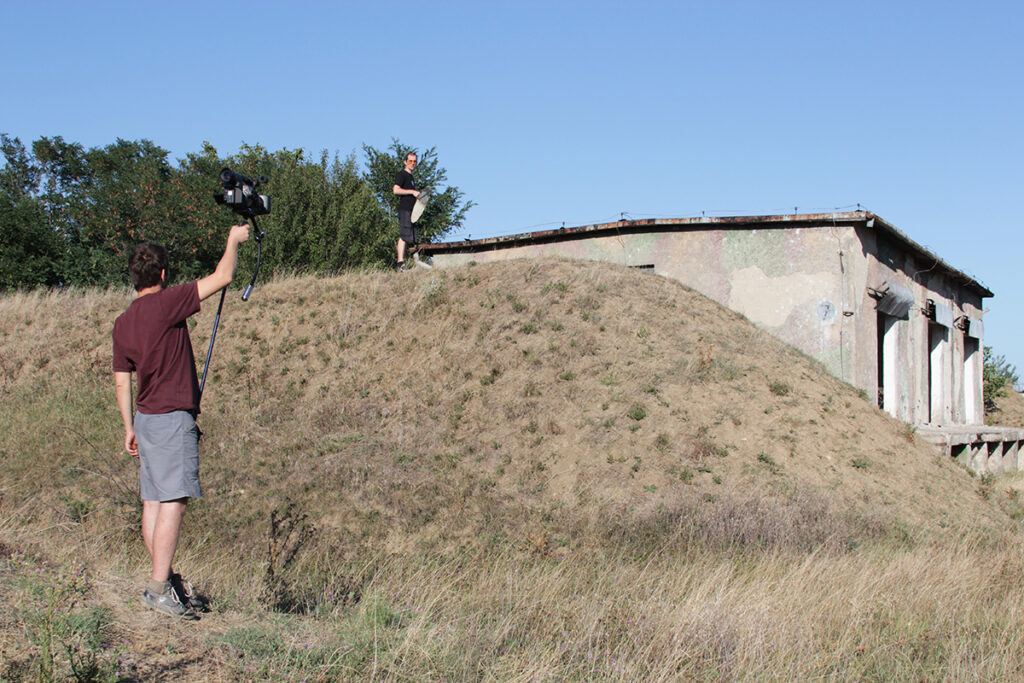
making of, photo Anca Gyemant